Best Instant Cameras of 2026: Polaroid and Instax, Compared
Updated 2026-11-10 · By the Touch Grass editors
The best instant camera for most people is the Instax Mini 13 (about $94): it is fully automatic and its film costs about 90 cents a print. For classic square Polaroids, get the Polaroid Now Gen 3 (about $120). The Polaroid Go Gen 3 (about $90) is the smallest, and the Polaroid Flip (about $220) is the most automated.
An instant camera gives you one physical photo per moment. Nobody swipes past it, and it ends up on a fridge or in a shoebox instead of a cloud folder nobody opens.
The camera is the small cost. Film is where the money goes, so we list the cost per print for each pick using pack prices we checked. Prices move, so check the retailer for today's price.
| Camera | Price | Film | Film cost per print | Best for |
|---|---|---|---|---|
| Instax Mini 13 | About $94 | Instax Mini | About $0.90 | Most people, kids, parties |
| Polaroid Now Gen 3 | About $120 | i-Type or 600 | About $2.37 (i-Type) | Classic square Polaroids |
| Polaroid Go Gen 3 | About $90 | Polaroid Go | Check current Go film price | Smallest, most portable |
| Polaroid Flip | About $220 | i-Type or 600 | About $2.37 (i-Type) | Fewest wasted shots |
Best overall: Instax Mini 13
The Instax Mini 13 is the best instant camera for most people because it handles exposure for you and runs on the cheapest instant film.
Exposure and flash are automatic. It has a selfie mirror, a 2- or 10-second self-timer, and a close-up mode you reach by turning the lens ring. It takes two AA batteries. Digital Camera World's 2026 review says it "has finally mastered selfies."
Prints are credit-card size and develop in about 90 seconds, which is quick enough to pass around at a party. A twin pack of Instax Mini film is 20 photos for about $18, so about 90 cents a print ($17.99 ÷ 20).
Not for: people who want big square prints or the classic Polaroid look. The prints are small.
Best classic Polaroid: Polaroid Now Gen 3
The Polaroid Now Gen 3 is the best pick for the classic white-frame square Polaroid, at about $120.
It has two-lens autofocus: one lens for 0.4 to 1.3 m (portraits and close-ups) and one for 1 m to infinity (landscapes and groups). It picks from six apertures between f/11 and f/64, recharges over USB-C, and has a self-timer and double exposure. It shoots both i-Type and 600 film.
The print is the draw. Polaroid i-Type film gives you a 79×79 mm image on an 88×107 mm print, much larger than an Instax Mini. It also costs more: about $2.37 a print ($18.99 ÷ 8) and 10 to 15 minutes to develop.
Not for: anyone shooting a lot of photos on a budget, or anyone who wants a print to hand over in 90 seconds.
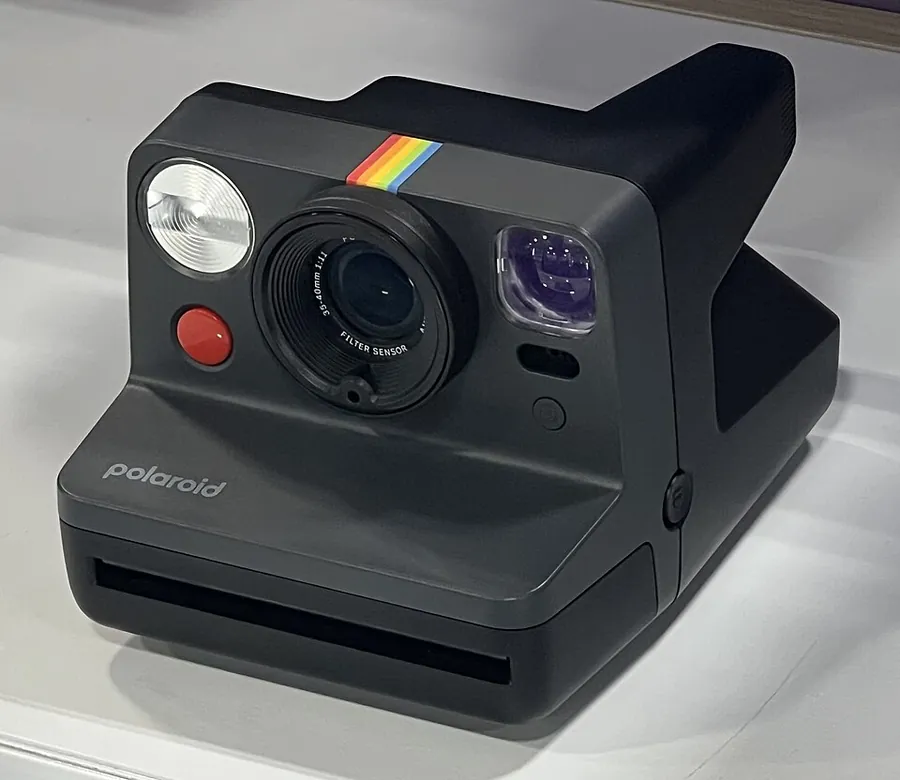
Best pocket instant camera: Polaroid Go Gen 3
The Polaroid Go Gen 3 is the best instant camera to carry everywhere. PetaPixel covered its June 2026 launch as the world's smallest instant analog camera.
The 2026 version adds a new lens, a stronger flash and five new colors. It keeps the selfie mirror, self-timer and double exposure. At about $90 it's also the cheapest Polaroid camera on this list.
It uses Polaroid Go film, a smaller square format that only fits Go cameras. Go film isn't in our price checks, so look up a pack before you buy to know the real running cost.
Not for: people who want full-size Polaroid prints or already own i-Type film.
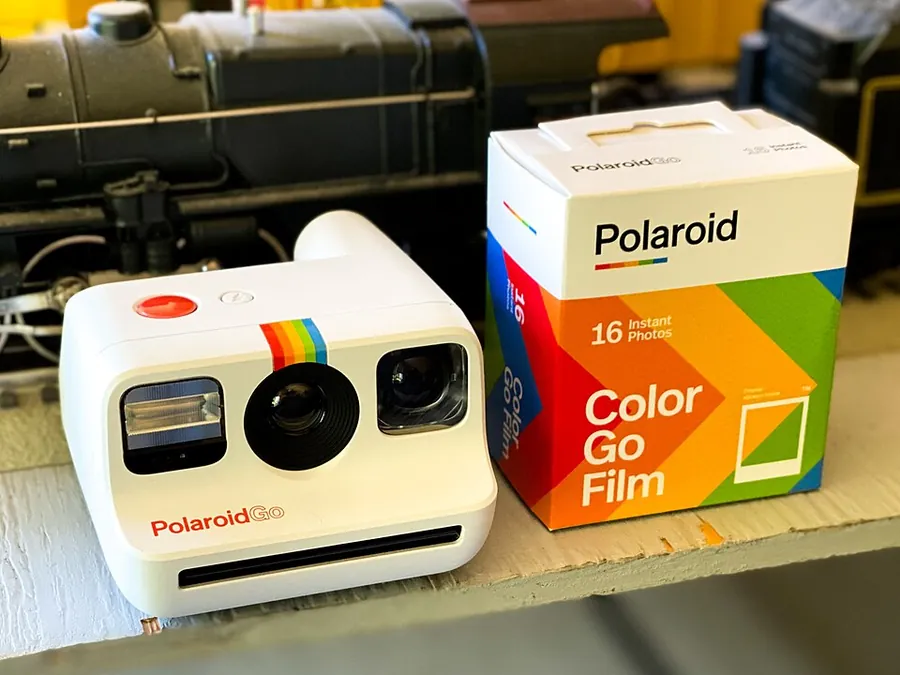
Best for getting every shot right: Polaroid Flip
The Polaroid Flip is the pick if wasted prints bother you, because it does the most work to get focus and flash right the first time.
It uses sonar autofocus with a four-lens hyperfocal system, scene analysis and Polaroid's strongest flash. It shoots i-Type and 600 film. There's an optional Bluetooth app, but you don't need it to take photos, so the camera works fine as a phone-free tool.
At about $220, it costs more than the other three cameras. That pays off if you're spending about $2.37 a print on i-Type and want fewer dark or blurry ones.
Not for: casual shooters or first-timers. The Now Gen 3 does most of the same job for about $100 less.
Which instant film should you buy?
Buy the film your camera takes. Instax Mini film only fits Instax Mini cameras, i-Type and 600 film fit the Polaroid Now and Flip, and Go film only fits the Polaroid Go.
- Instax Mini Film Twin Pack: 20 photos, ISO 800, develops in about 90 seconds. About $18, though retail prices range from about $17 to $25.
- Polaroid Color i-Type Film: 8 photos, ISO 640, develops in 10 to 15 minutes. About $19.
A tip that saves money: buy a few packs at once before a trip or party. Running out halfway through a birthday party is an easy mistake to make. For a side-by-side of the two systems, see Polaroid vs Instax.
Instax Mini Film Twin Pack
Twenty prints for any Instax Mini $17.9920 photosPolaroid Color i-Type Film
Classic square Polaroid film, white frame $18.998 photosWant the analog wait without paying per print?
Get a film camera or a screenless digital camera instead. Both give you the same "find out later" feeling for much less per photo.
The Kodak Ektar H35N is a reusable half-frame film camera (about $65) that gets about 72 photos from a 36-exposure roll of Kodak Gold 200. That's about 15 cents a frame for film, plus lab costs. The Camp Snap 2 (about $70) is a digital camera with no screen at all, so photos are free after you buy it. Our best screen-free cameras guide covers both.
How do you choose an instant camera?
Start with the print you want, then the budget for film.
- Small, cheap, fast prints: Instax Mini 13.
- The classic square Polaroid: Polaroid Now Gen 3.
- Smallest camera: Polaroid Go Gen 3.
- Best hit rate: Polaroid Flip.
If it's a gift, add a film pack. A camera with no film is a disappointing thing to unwrap.
Frequently asked questions
What is the cheapest instant camera to use?
The Instax Mini 13. Its film costs about 90 cents a print ($17.99 for 20), compared with about $2.37 a print for Polaroid i-Type film ($18.99 for 8).
Do Polaroid and Instax use the same film?
No. Instax Mini cameras take Instax Mini film. The Polaroid Now Gen 3 and Flip take i-Type and 600 film, and the Polaroid Go takes its own Go film.
How long does instant film take to develop?
Instax Mini film develops in about 90 seconds. Polaroid i-Type film takes 10 to 15 minutes.
Which instant camera is smallest?
The Polaroid Go Gen 3. PetaPixel covered its 2026 launch as the world’s smallest instant analog camera.
Do you need an app for the Polaroid Flip?
No. The Flip has an optional Bluetooth app, but the camera focuses, meters and shoots on its own.
What batteries does the Instax Mini 13 use?
Two AA batteries. The Polaroid Now Gen 3 is rechargeable over USB-C instead.
Sources
We may earn a commission when you buy through links on this page, at no extra cost to you. It never decides what we list. More
Keep reading
Polaroid vs Instax: Cost Per Photo, Prints and Which to Buy
Polaroid vs Instax, with the math: Instax Mini film is about $0.90 a print and Polaroid i-Type about $2.37. Compare cameras, prints and which to buy.
Best-of listBest Screen-Free Cameras of 2026: Digital, Film and Instant
The best screen-free cameras of 2026, from the Camp Snap 2 to half-frame film and instant cameras, with prices, cost per photo and who each one is for.
Best-of listBest Analog Gifts Under $50 (Screen-Free Ideas for 2026)
The best analog gifts under $50 for 2026: Kodak Charmera, Tamagotchi Paradise, Hobonichi Techo, Casio F-91W and more screen-free ideas for all ages.